Note: this is an updated essay that was originally published on Medium in 2021.
Some of the biggest names in entertainment industry were Wonsal, Gershowitz, Bulsara, Beilin, Konigsberg. Don’t recognize any of them? Perhaps you are more familiar with the Anglicized versions: Warner, Gershwin, Mercury, Berlin, and Allen?
In 2021, after I wrote an article on the music industry’s celebration of AAPI Heritage Month, I was invited to talk about it on a music business podcast. While chatting off-camera, my host mentioned how Chloe Wang found success as an actor only after she changed her name to Chloe Bennet.
The host pointed out that many of the celebrities of Asian heritage do not use an Asian-sounding name professionally. It doesn’t always happen on purpose, as many of the white-passing Asian American celebrities were born with “non-ethnic” last names. Michelle Branch, Chrissy Teigen, Vanessa Hudgens are some examples. But it does seem that most white-passing (or Black-passing) Asian Americans do not draw attention to their Asian American heritage in their stage names.
Assimilation of other ethnicities
Taking on a more “American” name is nothing new. In the past, celebrities with Jewish, Polish, or Italian names often used a stage name that was more palatable to Hollywood. It’s strange to think that, not so long ago, these names were not considered “American” enough so they had to be Anglicized to fit in.
The first three of the Warner Brothers emigrated with their Polish-Jewish mother from Poland to Canada, and eventually the U.S. in 1889. Sam Warner, Harry Warner, and Albert Warner were originally named Szmuel Wonsal , Hirsz Wonsal, and Aaron Wonsal.
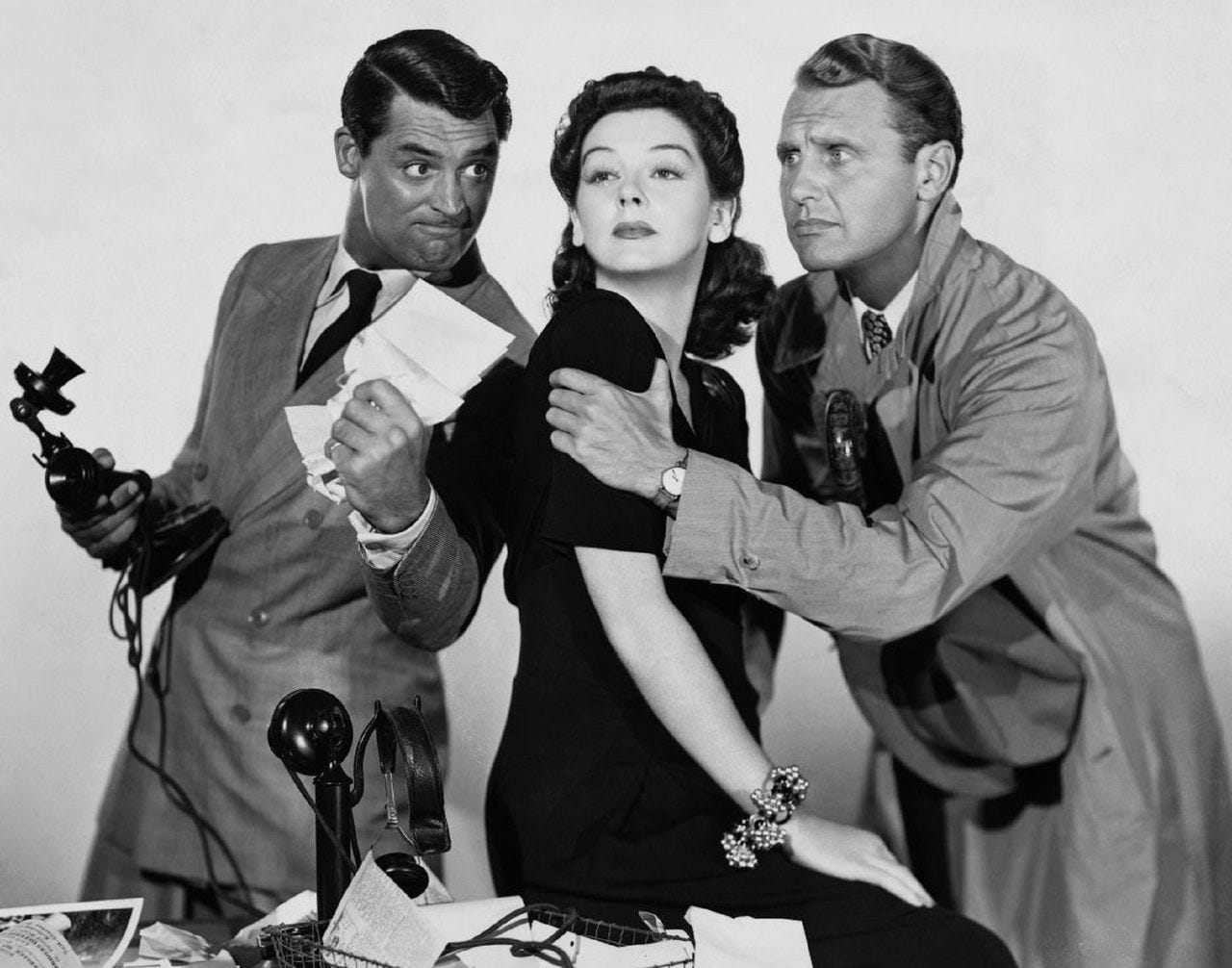
Cary Grant (born Archibald Alec Leach) was forced to adopt a more American-sounding name by Paramount Pictures co-founder B. P. Schulberg in 1931.
In the case of George (born Jacob Bruskin Gershowitz) and Ira Gershwin (born Israel Gershowitz), their whole family chose to Americanize their names. They are of Russian-Jewish descent.
Irving Berlin, perhaps the most prolific songwriter in modern times, was born Israeil Beilin. Could he have succeeded without changing his name?
In 1949, Anthony Dominick Benedetto was renamed “Tony Bennett” by Bob Hope when the latter invited the former to go on the road with him.
Allan Stewart Konigsberg officially became Woody Allen at the age of 17 in 1952.
In 1958, at age 9, Bernadette Peters (born Bernadette Lazzara) adopted her father’s first name to avoid being stereotyped and being cast only for Italian roles.
Bob Dylan (born Robert Allen Zimmerman) legally changed his name in 1962. In quoting a 2004 interview, he explained the name change, saying sometimes people are born “with the wrong names, wrong parents.”
It wasn’t just the celebrities, either. It was, and still is, very common for immigrants to take on an “Americanized” version of their names in order to fit in, or to make it easier for everyone to remember, accept and interact with them. My husband has recently found that his Italian ancestors, after moving to the U.S., changed their first names from Fazio to Frank, and from Consetta to Catherine, etc. This practice is still very common today among new Asian and African immigrants.
Although Asian Americans have been in the U.S. for several generations, our Asian names have yet to fall below the threshold of exoticism where they would be considered “ordinary American” names such as Polish, Jewish and Italian ones are today.
The stereotypes about us, imprinted into the American psyche through caricatured depictions in media, have ensured the status quo. It isn’t just the entertainment industry in which we’re struggling. Studies show that Asian last names on resumes lead to fewer job interviews. (Side note: While there has been anecdotal evidence of subconscious bias against Asian-American college applicants, it has been extremely disappointing to see this rhetoric weaponized against the Black community, striking down affirmative action in the process. We have much work to do to address anti-Black sentiment in the Asian American community.)
For those who are of mixed heritage, it can get even more complicated because the stereotypes associated with their looks and those associated with their names differ. When Chloe Bennet was Chloe Wang, her name and appearance confused many a casting director. Those looking to book her for an Asian role would tell her that she did not look Asian enough for the part. Yet, “Chloe Wang” was not white enough to play the lead role either.
Nowadays, nobody would raise eyebrows at names such as Coppola, Leibovitz or Krasinsky, nor would they perceive them as foreign. But it wasn’t always this way, not even a few decades ago. So maybe there is hope that some day soon Asian names will enjoy the same privilege of being average American names.
Is it discrimination if it’s better marketing?
If a name is too long, too difficult to pronounce, why not use something shorter and more memorable? What’s the harm in making it easier for people to remember? After all, many have done it before, and have thrived because of it. Is that so bad? It’s not a trivial question.
British icon Freddie Mercury was born Farrokh Bulsara. Nobody would deny that “Freddie Mercury” sounds like a rock star. “Freddie” seems intimate, as though you’re best friends. “Mercury” has powerful, bombastic connotations. The name is easy to spell, it’s short, and it even rhymes. It rolls off the tongue, as they say. It’s a memorable, iconic name, and a marketer’s dream.
What does “Farrokh Bulsara” evoke to you? Do you catch yourself thinking he’s an immigrant, dark-skinned, and probably speaks a foreign language? If so, does this person sound like an American rock star to you? If not, how do you feel about a foreign rock star? Does that sound cool or uncool? How often do we take time to notice those stereotypes in our own perception and actively try to undo them? Can we do better?
Marketers want you to think what they are promoting is cool, and they will use your preconceived notions, your internalized stereotypes, your deepest fears and yearnings to achieve it if they can. It’s their job, isn’t it? They could work extra hard to make Tony Benedetto a hit, but why bother when it’s so much easier to go with Tony Bennett?
So is it their fault or yours? Who is perpetuating the vicious cycle of marketing whiteness because whiteness sells, which then increases demand for more whiteness? Is it the marketer who optimizes based on consumer behavior, or is it the unconsciously biased consumer?
Capitalism doesn’t mind racism if it’s the path of least resistance
Sure, it makes marketing easier. But by Anglicizing ethnic names in media, aren’t we reinforcing the notion that other ethnic groups do not belong, that they need to be assimilated (even though they are already American)?
I get that a film or other creative output can be a huge financial gamble and the production companies want to maximize their odds of success any way they can. But this is what capitalism is: making the market more efficient, optimizing supply and demand. Suppliers want to increase demand as much as they can, as easily as possible. And that is why capitalism is a great cover for racism.
Racism is defined as systemic oppression of a racial group to the social, economic, and political advantage of another.
Racism today is more often experienced as a system of oppression, not an instance of it. It’s less about individuals exhibiting discriminatory behavior, more about entire systems being designed in such a way that discrimination is the path of least resistance. It is doing only what is convenient. It is what happens if we don’t go out of our way to avoid it. It is what happens when we’re not thinking too hard. It is what happens when we’re not being intentionally inclusive.
And when we’re focused on maximizing demand and supply, it is so much easier to take that path of least resistance, to do only what’s convenient, to not go out of our way. Because we’re optimizing for profits, not social justice or progress.
In other words, when it’s easier and more efficient to oppress, capitalism dictates that oppression is justified because that’s what optimizes the market. The question is whether it is right to do so.
I’m not saying throw capitalism out of the window, but true capitalism doesn’t really exist anywhere. The U.S. is mostly a capitalist country, but it has elements of socialism (roads, infrastructure, Social Security, public schools, parks). All I ask is to stop pretending we’re 100% capitalist and therefore must obey the (speculative) market forces to the letter. The unexpected success of projects like “Crazy Rich Asians” and “The Farewell” have proved how those speculations about demand are sometimes just biased guesses.
Incapable or not given a chance?
Are Americans (and Europeans) so incapable of learning that we have to simplify and Anglicize and westernize everything? I don’t believe that is true. I think that the majority of Americans are smart, empathetic people who would easily relate to and learn to appreciate different cultures if they were only given the chance to do so with a little more exposure.
Just look at the restaurant industry. Americans love all cuisines and seem to have no trouble spelling sushi, chow mein, pad thai, naan, poke, shawarma etc. These dishes are part of the American cultural fabric now, and many are distinct from the traditional recipes that originally inspired them.
Perhaps more poignantly, look at how accessible western culture seems to be elsewhere. People in Asia or Africa have no trouble enjoying a good old re-run of Friends and do not seem to be confused by the English names. It seems ridiculous to suggest that the converse could not be true.
Furthermore, I come from a former British colony where most people have very long Anglicized Indian or Chinese names. While the names may not roll off the tongue, it isn’t impossible for us to remember our neighbors’ names, or how to pronounce or spell them. I can still spell the names of each of the 100 or so kids I’ve ever shared a classroom with. Do we have superior brains? I don’t think so. We have just gotten used to it. I think frequent exposure to “exotic” names would make them more easily memorable to the average American.
But how long is too long though?
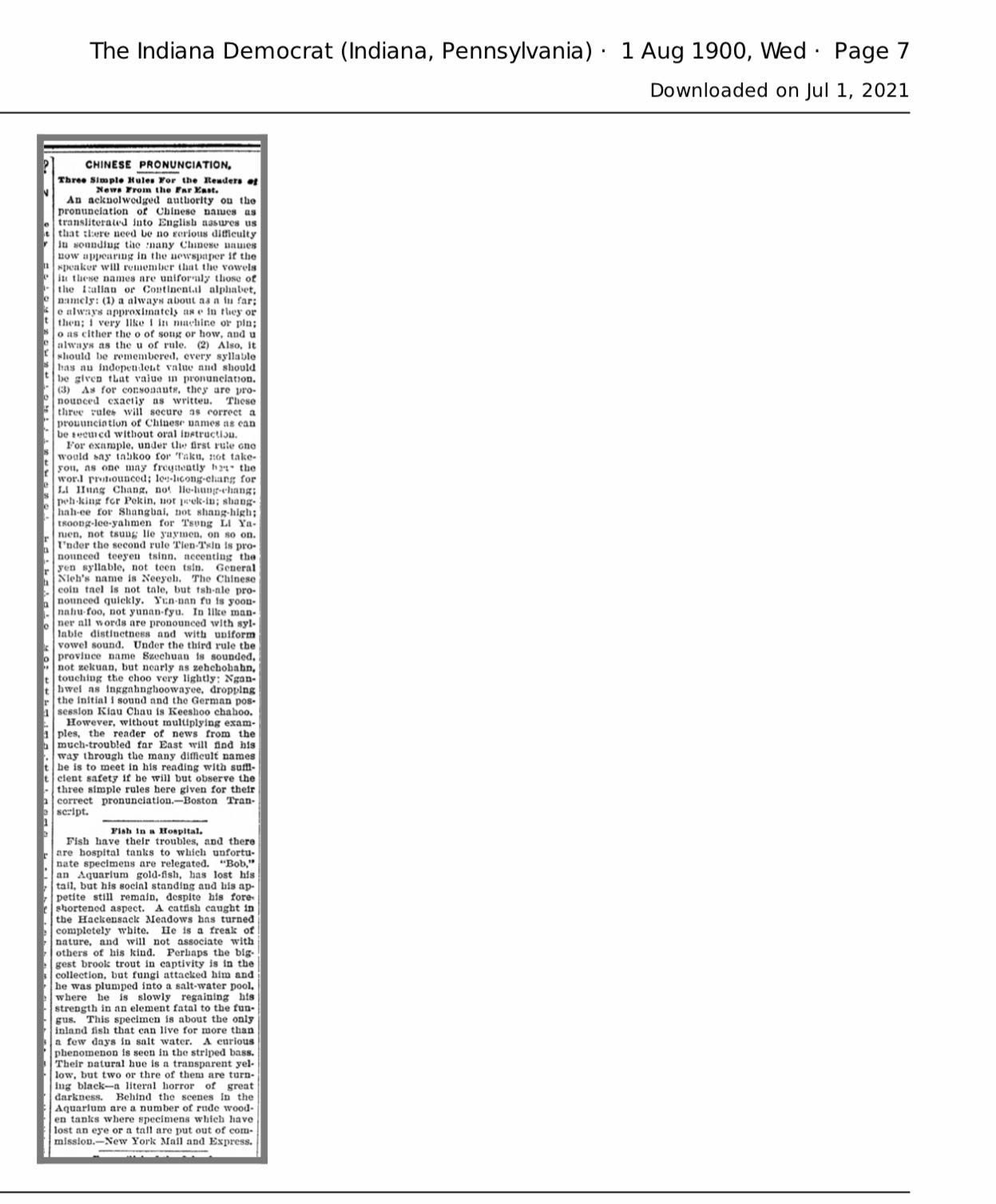
Any racism aside, it is a fact that the longer a name is, the harder it will be for people to correctly remember or spell it. Even with the best of intentions, it is probably not possible for the average person to correctly pronounce names in all languages spoken in these United States. I personally am often unsure how to pronounce Polish or Czech names for example. I’m willing to learn, and I definitely have learned colleagues’ names in the past, but these are not names I would likely remember if I heard them announced on the radio after a song played. At some point, we have to accept that as humans, we have terrible memories and it’s even worse when it’s something we’re not familiar with.
In search of a memorable, palatable name
For those who are writing the scripts, or casting actors, or signing on and promoting artists, it’s a compromise between expedient profit and contributing to the advancement of a diverse cohort of creatives. But for those who are taking on a new name, it is a choice between practicality and identity. How do you make a new name feel like your own when it’s not the name you’ve been called your entire life?
I have long considered and resisted a name switch myself.
My given name is a hyphenated English name - it sounds pretty country and my music isn’t.
My last name is three anglicized Chinese names hyphenated together. It even confuses Chinese people.
I can’t blame people for not knowing where to classify me sometimes. I have a first name that’s “not Asian enough” compared to my looks and a last name that’s “too complicated” for Americans. My full name is 21 characters long, and that’s without the three hyphens. That’s way more hyphens that most people can handle, even if each of the names are easily readable in English. It doesn’t exactly roll off the tongue even if it’s not hard for a first grader to just sound it out.
A shorter name that is more culturally ambiguous might be less confusing for people who can’t currently reconcile my English, southern-sounding name with my very East Asian face. It might be easier to remember. It might make marketing a whole lot easier.
When I originally published this piece on Medium, I was still resisting the name switch. I felt that adopting a stage name would be like putting on a mask or a thick layer of makeup and never taking it off. For so long, I resisted and tortured myself with hypotheticals. My name was part of my identity. What would it mean to give it up for another? Could I find one that felt like me? Maybe the problem isn’t my name but my actual work. Would I be contributing to the problem by caving in? Would caving in mean accepting the status quo? Would any of that matter if my work never got in front of people because of my lack of “marketability” as a person?
Last year I finally decided to give it a shot. After all, I could always go back to my old name if I didn’t like it. The hardest part was finding a pseudonym that truly felt like a name I could carry indefinitely. I had brainstormed so many ideas over the last decade but nothing had felt right... until it finally hit me one day. It was so obvious I don’t know how I didn’t think of it sooner. LAZOU.
Not an American name
It was important for me to hold on to my Mauritian roots. “Lazou” in Mauritian Creole means “cheek” and it’s a nickname some high school friends called me because I’ve always had chubby pinch-worthy cheeks. It doesn’t feel so foreign because its origin was part of my identity all along. Is it an “American” name? Nope. But it is an easier one to remember.
I have to admit that it does feel different hearing it used in an English context, as opposed to in Creole. It feels out of context, but it also invites questions about its origins and I love telling people its story. Anecdotally, I’ve had more success pitching my music as LAZOU so far than I’ve had with my old artist name. Coincidence? Possible. For now, I’m enjoying releasing music as LAZOU. You can find me and listen wherever you get music!
Funnily enough, because I don’t speak Chinese, I didn’t anticipate that people would take one look at my Asian face and decide it must be pronounced “Lah Zhou”. So now I have to say “LAZOU rhymes with kazoo” in my bio 🙃. I guess the takeaway is use a name you like and are comfortable with because people will mess it up regardless!
PPS: If you’ve also struggled with your stage name or pen name, I’d love to hear your thoughts!